SI.gov Goes Live as AI.gov Redirects: The White House Takes ‘Super Intelligence’ Online
On this page
Two weeks after Executive Order 14434 told federal agencies to say “Super Intelligence (SI)” instead of “AI”, the White House has moved its own web presence over. SI.gov is now the government’s hub for SI policy, and the old AI.gov address forwards there.
What launched
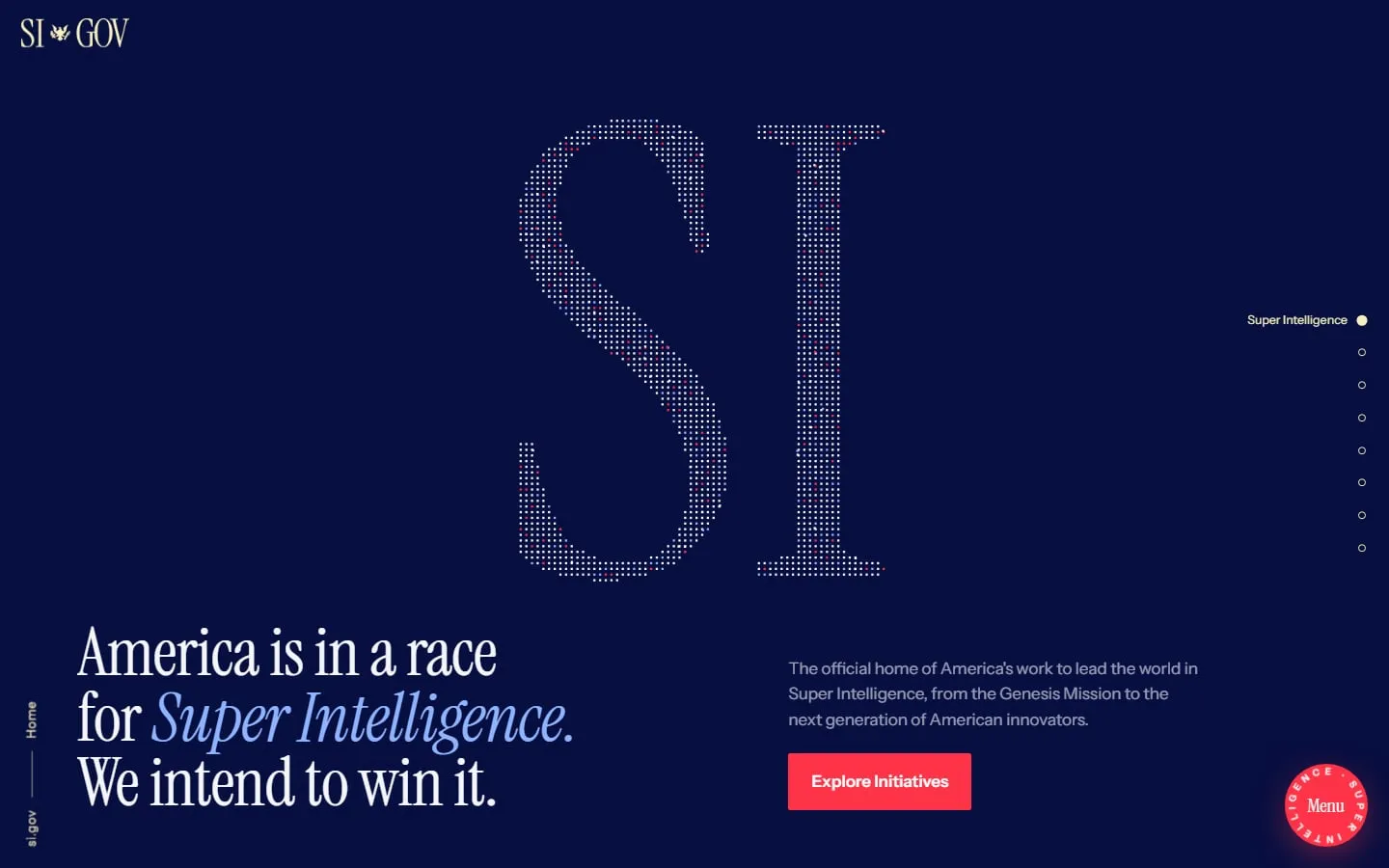
According to Fast Company, the administration launched SI.gov on Tuesday, October 13. AI.gov, which previously linked to the administration’s AI action plan and executive orders, now returns a permanent (301) redirect to the new domain. The White House Office of Science and Technology Policy promoted the site on X with the line “The Super Intelligence era is here”, according to press reports.
The homepage calls itself “America’s home for Super Intelligence policy” and opens with the message: “America is in a race for Super Intelligence. We intend to win it.”
What’s on it
The site is a policy showcase, not a regulator. It highlights:
- The Genesis Mission, described as the nation’s flagship SI-for-science initiative, which unites 15 federal agencies with industry, academia and the Department of Energy’s National Laboratories;
- SI Education, a White House task force effort on SI literacy for K-12 students and teachers;
- The Presidential SI Challenge (below);
- The Pledge to America’s Youth, a public-private partnership in which companies commit resources to SI education.
The site lists the administration’s executive orders on the technology, renamed in the new vocabulary (for example “The American SI Stack”). It does not cite EO 14434 by number.
A renamed Presidential Challenge
The same day, the White House announced that First Lady Melania Trump had launched the 2027 Presidential SI Challenge, a project-based competition in which K-12 students use SI to tackle problems in their schools and communities. According to the release, the inaugural edition, held under the “AI” name, drew more than 20,000 students from all 50 states and U.S. schools abroad.
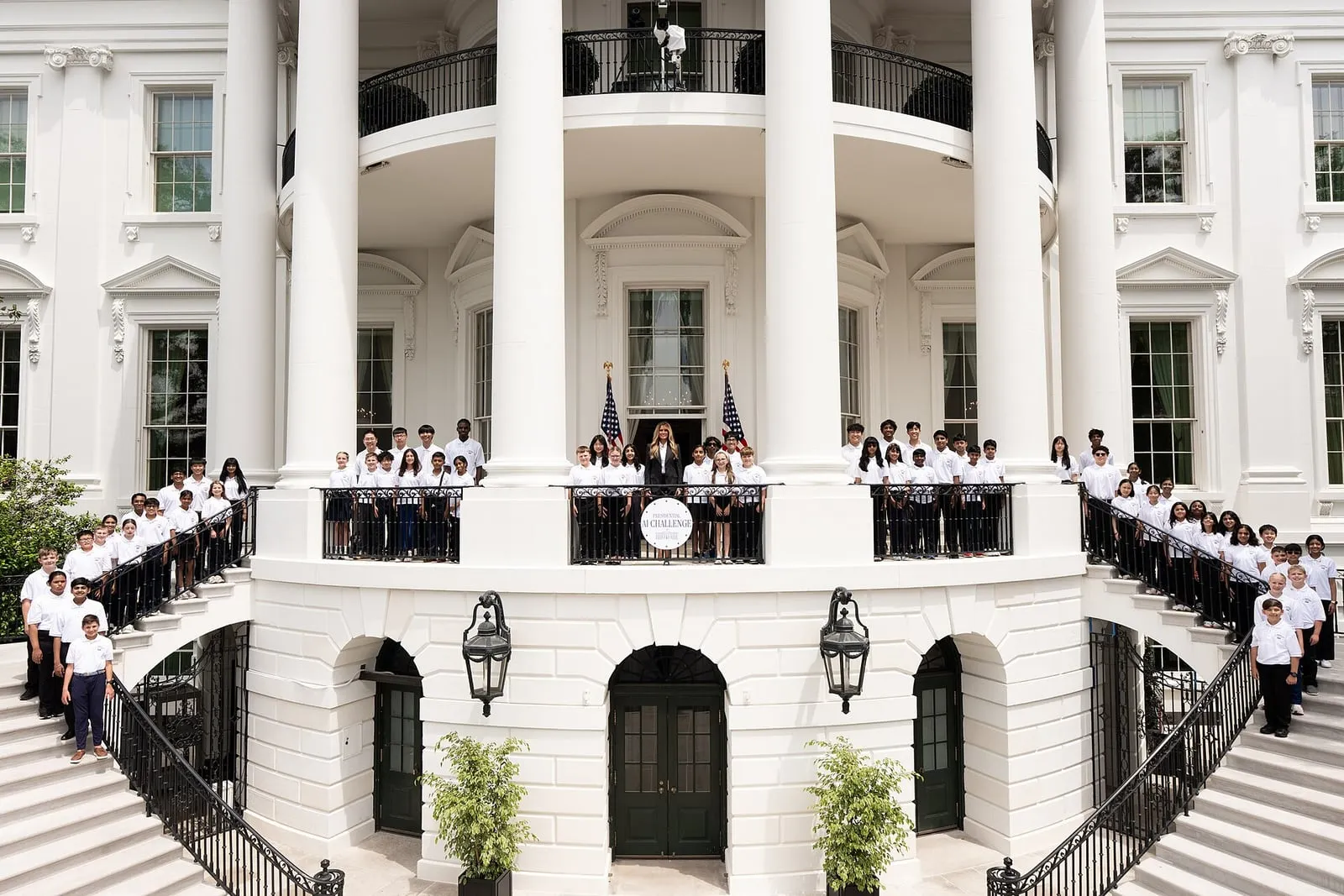
The release also creates a First Lady Seal of SI Readiness for schools that complete and document SI-readiness milestones. “America’s next groundbreaking idea is already sitting in a classroom,” Mrs. Trump said. Sign-up runs through SI.gov.
The language push around it
The launch caps a week of the administration leaning into the term. In October 8 remarks at the Science: A New Golden Age Summit, OSTP Director Michael Kratsios used “super intelligence” throughout, saying it “promises to be the greatest accelerant of scientific progress in human history.”
President Trump went further on Truth Social. In a post reported on October 9 by HuffPost and UNILAD Tech, he wrote: “The White House considers anyone that uses the term, ‘Artificial Intelligence,’ as opposed to the highly accepted new and more accurate term, ‘Super Intelligence,’ THE ENEMY!”
Reaction
The administration presents the new vocabulary as recognition that today’s systems do more than imitate human intelligence, and some commentators quoted by HuffPost praised the President’s post. Critics see it differently. Former U.S. ambassador Michael McFaul called labelling people “the enemy” for their word choice “deeply disturbing”, according to HuffPost, and Fast Company called the new site “a rebrand fail”. For the wider picture, see how the rename is landing.
What it doesn’t change
A new domain doesn’t change the law. Statutes, regulations and contracts still say “artificial intelligence”, and SI is defined by reference to the existing legal definition. That could change once the White House sends Congress its proposed federal definition of SI, due around November 28.
Explainer: Executive Order 14434 · Background: AI vs SI
Sources
- SI.gov: America's home for Super Intelligence policy — The White House
- First Lady Melania Trump Launches 2027 Presidential SI Challenge and Establishes First Lady Seal of SI Readiness — The White House, October 13, 2026
- Remarks by Director Michael Kratsios at the Science: A New Golden Age Summit — The White House, October 8, 2026
- Trump's new 'superintelligence' website is a rebrand fail — Fast Company
- Trump Administration's new website shifts AI narrative to ‘Super Intelligence’ with launch of SI.gov — Business Today, October 14, 2026
- Trump Demands Use Of His Chosen AI Term, Calls Opponents ‘The Enemy’ — HuffPost
- Trump warns rejecting ‘Super Intelligence’ makes you ‘the enemy’ as he continues to push rebrand — UNILAD Tech, October 9, 2026
Written by
Luka Kušec · Editor
Editor of SI.info. Writes about Super Intelligence, technology policy and the people building frontier models.