AI or SI? Washington Asked the IMF to Say ‘Super Intelligence’. The Final Statement Said ‘Advanced Intelligence’
On this page
“AI or SI?” is no longer a question only for U.S. federal agencies. This week the United States took the question to the International Monetary Fund. It asked the Fund’s top steering committee to replace “artificial intelligence” with “super intelligence” in its official statement. The text published on October 17 used neither term. It settled on a third: “advanced intelligence technologies”.
What Washington asked for
Executive Order 14434 requires U.S. federal agencies to say “Super Intelligence (SI)” instead of “AI”. It does not bind other countries or international bodies. On October 15, Treasury Under Secretary for International Affairs Erin Browne told Reuters that Washington wanted the change to take hold internationally as well. She said the United States was negotiating with other IMF shareholders to use the new term in the statement being drafted by the International Monetary and Financial Committee (IMFC), the ministers’ group that steers the Fund.
“We’re still in the middle of negotiations on that statement,” Browne said, adding that “we think that more appropriately encapsulates the technology at hand.” She called the technology “a driving force behind American growth and global growth” and said: “Many countries are looking to the US to set the standards.” She declined to say whether the United States would refuse to back a statement without the change.
According to a source quoted by Reuters, U.S. officials would insist on the new language, and the push had raised concerns among some other members. The IMFC normally works by consensus. Reuters reported that if the members could not agree, the chair could fall back on a chair’s statement, possibly describing the topic as “new technology”.

What the statement says
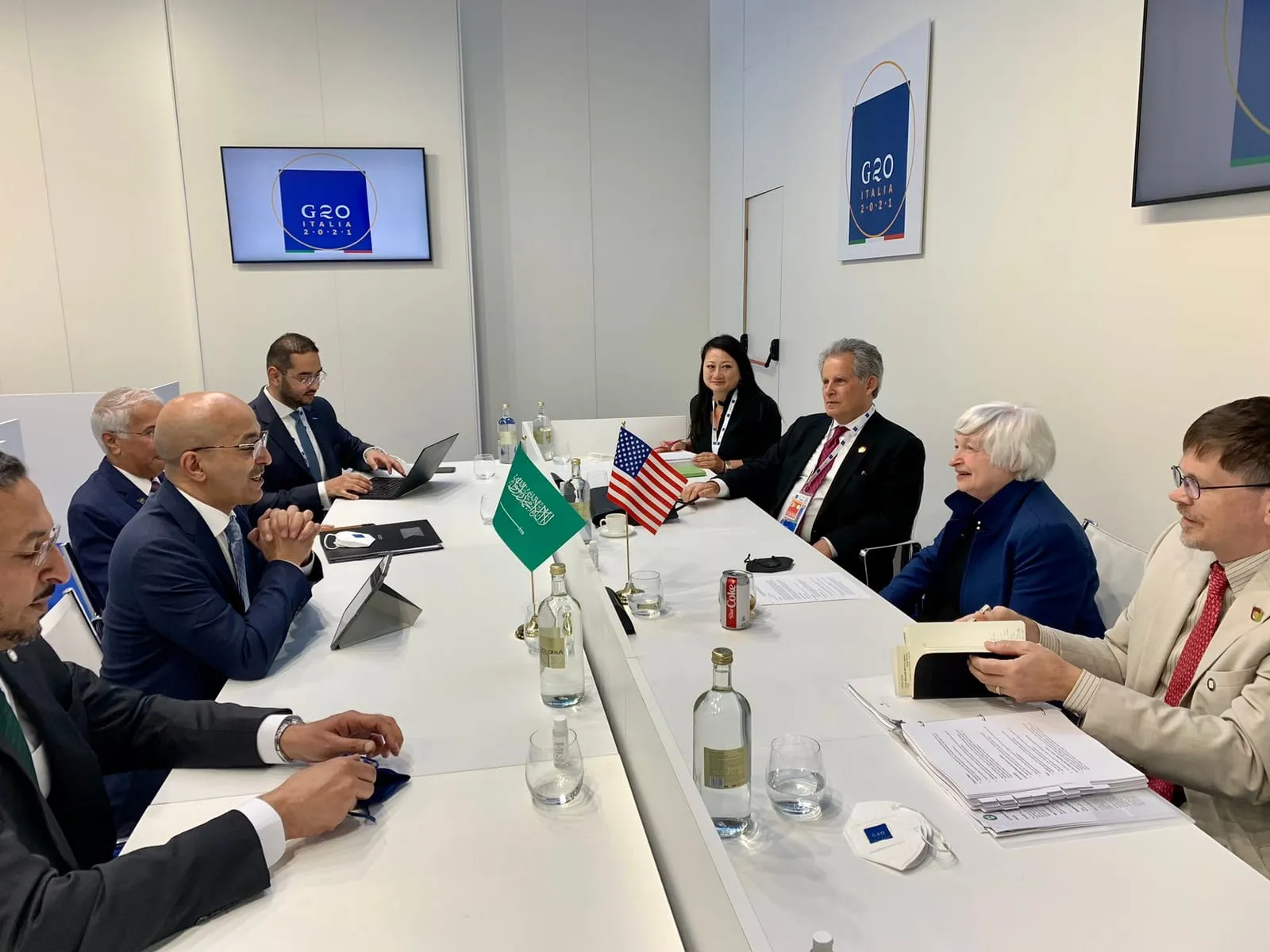
The chair’s statement for the 54th IMFC meeting, issued by Saudi Finance Minister Mohammed Al-Jadaan, contains no reference to artificial intelligence, according to Reuters. The text, released by the IMF and reproduced by Mirage News, uses “advanced intelligence technologies” throughout:
- “rapid progress in advanced intelligence technologies have been boosting investment and trade, and could lift productivity”;
- “uncertainties regarding the impact of advanced intelligence technologies on economic and financial issues” could, together with higher bond yields, amplify financial vulnerabilities;
- members back “harnessing advanced intelligence technologies and digitalization to raise productivity while addressing associated risks”;
- the Fund itself is encouraged to pursue “prudent internal adoption of advanced intelligence technologies.”
Al-Jadaan told Reuters that all members agreed to the statement’s language. “Look at this chair statement, it clearly says that all members agreed to the statement, so that’s what matters,” he said, in remarks that also addressed a walkout by delegates during the Russian finance minister’s speech.
A compromise, or a rebuff?
The outcome can be read either way. The final text dropped “artificial”, the word President Trump has said makes the technology “sound fake”. But it also stopped short of the U.S. term, so “Super Intelligence” has not yet become international vocabulary.
Two details suggest the old name hasn’t gone away. The U.S. Governor’s written statement to the committee, filed on the IMF’s site, uses neither “AI” nor “SI”. And outside the negotiated text, officials kept saying AI. Reuters reported that Al-Jadaan listed the rapid development of artificial intelligence among the risks facing the world economy. IMF Managing Director Kristalina Georgieva said many lower-income countries “that were not part of the AI value chain” feared falling behind.
AI, SI or “advanced intelligence”: is there a difference?
Not in the technology. All three labels describe the same systems: machine learning models, most of them large neural networks such as the transformers behind today’s large language models. What differs is who uses which word:
| Term | Who uses it | Legal status |
|---|---|---|
| AI (artificial intelligence) | Most companies, researchers, other governments, the EU AI Act | Defined in U.S. law (15 U.S.C. § 9401) and many other statutes |
| SI (Super Intelligence) | U.S. federal executive branch since Sept 29, 2026 | Defined by reference to the AI definition. A new federal definition is due around November 28 |
| “Advanced intelligence technologies” | The IMFC chair’s statement, October 17, 2026 | A negotiated phrase with no formal definition |
None of them means artificial superintelligence, the hypothetical system smarter than humans. The full comparison is in AI vs SI, and SI vs superintelligence explains that second distinction. To rewrite a text in either vocabulary, try the AI → SI Converter.
What’s next
The United States holds the G20 presidency, and Browne made clear Washington wants the term adopted abroad. Expect the same “AI or SI” question in other negotiated texts. At home, NASA and other agencies are still switching over, and SI.gov has replaced AI.gov.
Explainer: AI vs SI · Related: How the rename is landing
Sources
- US Treasury urges renaming AI as ‘super intelligence’ — Reuters via Oman Observer, October 15, 2026
- IMF members call for more support amid war shocks, ‘advanced intelligence’ risks — Reuters via Yahoo Finance, October 17, 2026
- IMFC chair says global economy resilient; delegates walk out on Russian official — Reuters via ThePrint, October 17, 2026
- Chair's Statement, Fifty-Fourth Meeting of the IMFC — International Monetary Fund, October 17, 2026
- IMFC Chair Issues Statement After 54th Meeting — Mirage News (reproduces the IMF release)
- U.S. Governor's Statement, October 2026 (IMFC) — International Monetary Fund
- IMFC Statements and Documents, 2026 Annual Meetings — International Monetary Fund
- Annual Meetings venue — World Bank
- First a gulf, then a lake, now a technology — The Next Web
- Executive Order 14434: Inaugurating the Era of Super Intelligence — Federal Register, October 2, 2026
Written by
Luka Kušec · Editor
Editor of SI.info. Writes about Super Intelligence, technology policy and the people building frontier models.